Skip to content
The appeal of lower-cost polyacrylamide is straightforward: same product, lower price, immediate budget saving. Procurement teams working under cost pressure face genuine incentive to source the cheapest compliant product available.
The problem is that with PAM, “compliant” is difficult to verify without systematic testing — and “same product” is almost never true across different manufacturers. The gap between a quality PAM and an inferior alternative is invisible at the point of purchase and only reveals itself over weeks and months of operation, in cost categories that procurement decisions do not typically account for.
This article identifies the six cost categories where inferior PAM consistently increases total operating cost — and quantifies the impact where typical data allows.
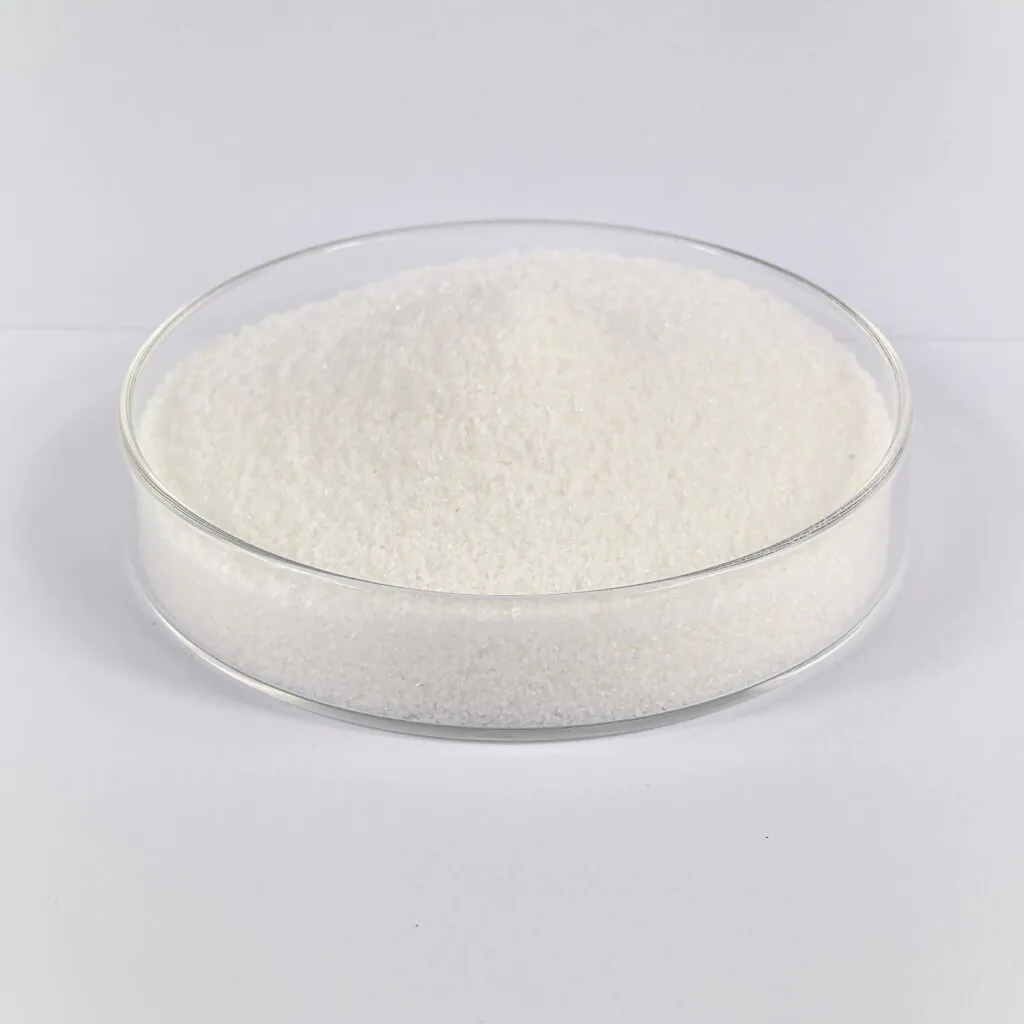
Cost Category 1: Higher Dosage to Compensate for Lower Performance
This is the largest and most direct hidden cost of inferior PAM — and the one most frequently attributed to other causes.
Inferior PAM typically has lower effective molecular weight, inconsistent charge density, or poor dissolution characteristics compared to quality grades at equivalent stated specifications. Any of these deficiencies means the polymer delivers less flocculation capacity per kilogram than a quality product of the same nominal grade.
The treatment system does not stop working — operators simply increase dosage until performance returns to acceptable levels. The polymer continues to be purchased at the lower price, but consumption increases by 20–40% to compensate. The net result is often higher annual polymer spend than the quality product would have required.
Typical dosage premium for inferior PAM: 20–40% above the quality product optimum, depending on the degree of performance shortfall.
Annual cost impact example:
- Quality PAM: $2.80/kg, 18 tonnes/year = $50,400
- Inferior PAM: $2.10/kg, 24 tonnes/year (33% higher consumption) = $50,400
In this example, the inferior product costs the same annually — but with no margin for further consumption increase if performance continues to decline. In practice, consumption often creeps higher as operators respond to variable performance with further dosage increases.
Cost Category 2: Increased Compliance Risk and Regulatory Costs
Inferior PAM’s inconsistent performance creates windows of treatment failure that quality products do not. These windows — when a batch with lower-than-expected molecular weight arrives, or when dissolution characteristics change between shipments — translate directly into effluent quality exceedances.
The financial cost of a single discharge limit violation varies enormously by jurisdiction and facility type, but commonly includes:
- Regulatory fines: Ranging from a few thousand dollars to hundreds of thousands depending on the violation severity and jurisdiction
- Permit conditions: Regulatory response to repeated violations often includes more stringent permit conditions, increased monitoring requirements, or formal compliance schedules — each imposing ongoing administrative and operational costs
- Remediation costs: If a significant discharge event causes measurable environmental harm, remediation liability can be substantial
For facilities operating close to discharge limits in markets with active regulatory enforcement, the expected value of compliance risk from variable polymer quality is a real and often underestimated cost.
Cost Category 3: Operator Time and Management Overhead
Inconsistent PAM quality generates troubleshooting work that consistent quality eliminates.
When treatment performance varies unexpectedly between batches or shifts, operators investigate — checking equipment, reviewing preparation procedures, adjusting dosage, running jar tests. This investigation time is not captured in polymer procurement costs, but it represents real labor expenditure that adds to the total cost of operating the treatment system.
More significantly, persistent unexplained variability erodes confidence in the polymer program. Operators begin running at conservative (high) dosages as insurance against unexpected performance drops. Management time is consumed by compliance monitoring and reporting. Treatment becomes a source of operational anxiety rather than a settled system.
Quality PAM, consistently performing to specification, eliminates this overhead. The treatment system becomes predictable, operator adjustments are minimal, and management attention can focus elsewhere.
Cost Category 4: Elevated Residual Acrylamide Risk
Inferior PAM products — particularly those from manufacturers with limited quality control — consistently show higher and more variable residual acrylamide monomer content than quality-manufactured grades.
The financial risk from elevated residual acrylamide operates on two levels:
Regulatory compliance: Facilities using PAM with residual acrylamide above applicable limits face direct regulatory violation exposure. In the EU, REACH limits industrial PAM to below 0.1% residual acrylamide. US NSF 60 certification requires compliance at maximum use level. Products without batch-specific residual acrylamide data cannot demonstrate regulatory compliance.
Liability exposure: In the event of an environmental incident where acrylamide contamination is identified, facilities unable to demonstrate that they sourced and used compliant-quality PAM face increased liability. Batch-specific CoA records are the primary defense — facilities sourcing products without this documentation cannot produce the evidence needed.
The cost of acrylamide-related liability can far exceed any polymer procurement saving. This risk is asymmetric: the saving from using cheaper product is certain and modest; the potential liability from a compliance failure is uncertain but potentially very large.
Cost Category 5: Supply Chain Disruption
Lower-cost PAM suppliers are often smaller manufacturers or trading intermediaries with less stable supply chains than established quality producers. Supply disruptions — delayed shipments, product quality failures requiring replacement, or supplier capacity constraints during periods of high demand — impose costs that procurement calculations do not capture.
A treatment plant that runs out of polymer, or receives a non-performing batch with no immediate replacement available, faces immediate operational challenges: reduced throughput, discharge limit exceedances, emergency procurement at spot prices, and the management disruption of an unplanned supply event.
The probability of supply disruption is higher with lower-tier suppliers, and the cost of a single significant disruption can exceed a full year’s procurement saving from choosing a cheaper source.
Cost Category 6: Sludge Disposal Cost Increase
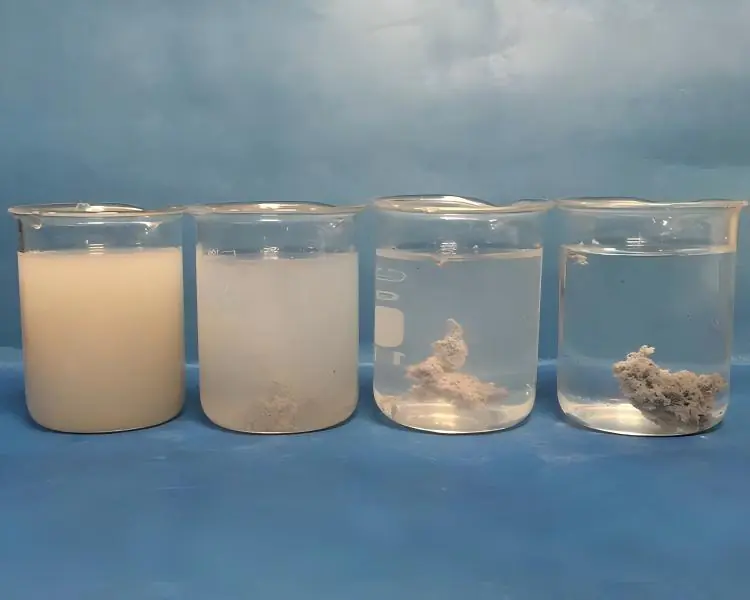
Inferior polymer that underperforms in sludge dewatering applications produces wetter cake with higher moisture content. Each percentage point increase in cake moisture increases disposal volume and cost.
For a facility disposing of sludge at $80/tonne, the difference between 65% and 75% cake moisture on a stream producing 10 tonnes/day of dry solids:
- At 65% moisture: 28.6 tonnes/day wet cake = $2,288/day disposal cost
- At 75% moisture: 40 tonnes/day wet cake = $3,200/day disposal cost
- Difference: $912/day = approximately $333,000/year
Even a modest dewatering performance shortfall from inferior polymer — 5 percentage points of additional cake moisture — creates disposal cost increases that vastly exceed the polymer procurement saving.
For guidance on optimizing sludge dewatering performance, see: Optimizing Sludge Dewatering with Cationic PAM
The Total Cost Comparison
When all six cost categories are included, the total cost advantage of quality PAM over inferior alternatives is typically substantial:
| Cost Category | Inferior PAM Impact | Estimated Annual Premium |
|---|---|---|
| Higher dosage consumption | +25–35% polymer volume | $5,000–$20,000 |
| Compliance risk | Variable, potentially very high | $2,000–$50,000+ |
| Operator troubleshooting time | 2–5 hours/week additional | $5,000–$15,000 |
| Acrylamide liability exposure | Low probability, high impact | Risk-adjusted value significant |
| Supply disruption | 1–2 events/year | $3,000–$20,000 |
| Sludge disposal increase | Facility-dependent | $0–$100,000+ |
The purchase price saving from inferior PAM is typically $5,000–$20,000/year for a mid-size industrial operation. The total additional cost from the categories above frequently exceeds this saving — often substantially.
Contact our technical team today to conduct a total cost comparison for your operation. We will calculate the full cost picture against your current supply. → Contact our technical team today
Frequently Asked Questions
How can we identify inferior PAM before committing to a large order?
Request batch-specific CoA from three recent production batches and compare molecular weight, charge density, and residual acrylamide values. Request a trial quantity and conduct comparative jar testing against your current product. Suppliers who cannot provide batch-specific documentation or decline trial requests are signaling quality limitations before you have spent a dollar.
Our current supplier’s product seems to be working — how do we know if we are paying a dosage premium?
Run a comparative jar test using a quality alternative at your current dosage and at 80% of your current dosage. If the alternative achieves equivalent or better performance at lower dose, you are currently paying a dosage premium with your existing product. The gap between what you are dosing and the true optimum is your hidden cost.
Is it worth switching suppliers if the switch involves requalification and operational risk?
Switching suppliers does involve transition costs — requalification testing, potential adjustment period, and administrative effort. These are real costs that should be included in the total cost comparison. However, for operations where inferior polymer is imposing significant ongoing costs, the break-even point for a supplier switch is typically within 6–12 months of the quality improvement being realized.
Conclusion
Inferior PAM imposes costs across six categories that rarely appear in procurement analysis: higher dosage consumption, compliance risk, operator overhead, acrylamide liability, supply disruption, and sludge disposal premium. The combined financial impact of these categories typically exceeds the purchase price saving from choosing lower-cost polymer.
The procurement decision that genuinely minimizes total cost is the one that accounts for all of these categories — not just the price on the invoice. For most industrial treatment operations, that decision consistently favors quality-manufactured PAM with verifiable, consistent specifications and proven treatment performance.
Ready to see the total cost comparison for your operation? Contact us today for a free analysis. → Get in touch today