Skip to content
Written by the HyChron Technical Team — water treatment specialists with over 15 years of field experience in municipal and industrial systems. Last reviewed: April 2026
Chemical manufacturing plants produce wastewater that is as diverse as the products they make. A specialty chemical plant’s effluent may contain process solvents, reaction byproducts, catalyst residues, and cleaning chemical surges — all in a single day’s production.
What chemical industry wastewater treatment systems share is this: the physical-chemical pre-treatment step — coagulation — is critical to system performance. Get it right and the downstream biological or advanced treatment stages work efficiently. Get it wrong and everything downstream is compromised.
PAC (Poly Aluminum Chloride) is the coagulant most commonly specified in new chemical industry wastewater treatment system designs, replacing alum across most applications due to its wider pH operating range, lower dosage, and reduced sludge production.
Operating a chemical manufacturing facility with wastewater compliance challenges? Contact our technical team for a free assessment and PAC recommendation.
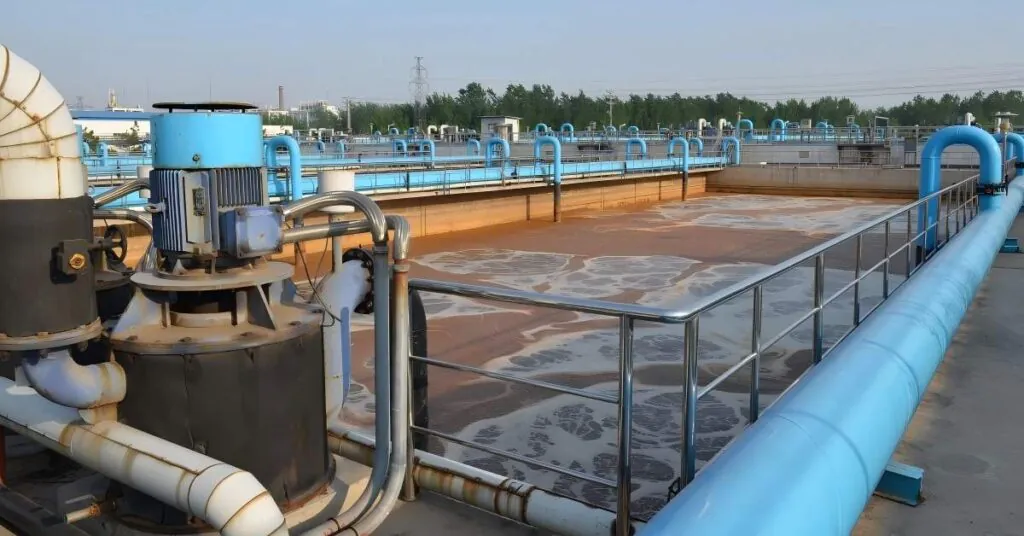
What Chemical Industry Wastewater Contains
Chemical industry effluent composition varies enormously by process, but common contaminants include:
- Suspended solids — catalyst fines, reactor residues, and process particulates
- Colloidal organic matter — reaction intermediates, polymer fines, and emulsified process chemicals
- Heavy metals — from catalyst systems, pigments, and corrosion inhibitors
- COD and BOD — from dissolved and colloidal organic compounds
- Color — from dye intermediates, pigments, and aromatic compounds
- Variable pH — acid and alkaline process streams combined in the treatment system
- Surfactants and emulsifiers — from cleaning formulations and process additives
PAC addresses suspended solids, colloidal organic matter, color, and a proportion of COD through charge neutralization and sweep flocculation — preparing the effluent for biological or advanced oxidation treatment downstream.
Why PAC Outperforms Alum in Chemical Industry Applications
pH variability tolerance. Chemical manufacturing effluent pH can shift dramatically between production batches, cleaning cycles, and process upsets. Alum’s effective window of pH 6.5–7.5 is frequently too narrow for chemical industry effluent, requiring constant pH adjustment that adds cost and complexity. PAC operates effectively from pH 5.0 to 9.0 — handling the majority of chemical industry pH variability without intervention.
Fast response to composition changes. PAC’s pre-polymerized structure reacts faster than alum when effluent composition changes abruptly — a common occurrence in batch chemical manufacturing where one production run ends and another begins. Faster floc formation means the treatment system responds to these transitions without producing off-specification effluent.
Reduced sludge from complex effluent. Chemical industry sludge often requires costly disposal due to organic and metal content. PAC’s 30–50% lower sludge production compared to alum directly reduces the volume of potentially hazardous waste generated — a meaningful cost reduction in chemical industry treatment operations.
Better performance with surfactant-containing effluent. Surfactants in chemical manufacturing wastewater stabilize colloidal particles and interfere with conventional coagulation. PAC’s higher charge density compared to alum provides more effective charge neutralization against surfactant-stabilized colloids.
Key Application Scenarios
Batch Chemical Manufacturing
Batch processes produce highly variable effluent — each production batch may have a different composition. PAC’s wide pH range and fast floc formation make it more tolerant of this variability than alum, reducing the need for manual dosage adjustments between batches.
Continuous Process Chemical Plants
Large continuous process facilities — producing commodity chemicals, solvents, or intermediates — generate consistent high-volume effluent streams that benefit from PAC’s lower dosage and sludge reduction advantages over alum.
Specialty Chemical and Pharmaceutical Manufacturing
Specialty chemical and pharmaceutical effluent often contains complex organic molecules, reaction intermediates, and process solvents at moderate concentrations. PAC removes the colloidal fraction of these organics, reducing the load on biological or advanced oxidation treatment and improving overall system performance.
Pigment and Dye Manufacturing
Pigment and dye manufacturing produces heavily colored, high-COD effluent. PAC is effective for color reduction and colloidal COD removal — similar to its performance in textile wastewater applications. For textile applications reference: Using PAC in Textile Wastewater Treatment

Dosage Guidelines
| Chemical Industry Application | Typical PAC Dosage |
|---|---|
| General chemical manufacturing effluent | 30–80 mg/L |
| High-COD batch process effluent | 50–120 mg/L |
| Pigment and dye manufacturing | 80–200 mg/L |
| Specialty chemical / pharmaceutical | 30–70 mg/L |
| Pre-treatment before biological stage | 25–60 mg/L |
Jar testing (ASTM D2035) is essential — chemical industry effluent composition varies significantly between facilities and production batches.
Dosing Procedure
- Equalize effluent before treatment to reduce composition variability
- Jar test regularly — especially after production schedule changes
- Dose at the flash mixing zone — G-value 200–400 s⁻¹ for 30–60 seconds
- Slow-mix flocculation — G-value 20–60 s⁻¹ for 15–25 minutes
- Monitor online — real-time turbidity or COD monitoring at clarifier outlet enables continuous dose adjustment
Integration with Chemical Industry Treatment Systems
Primary clarification. PAC removes suspended solids, colloidal organic matter, and a significant fraction of COD in the primary treatment stage — reducing the organic and solids load entering biological treatment.
DAF systems. For emulsified process chemical streams, PAC combined with DAF is effective for removal of colloidal organics and emulsified hydrocarbons that resist sedimentation.
Pre-treatment before advanced oxidation. Advanced oxidation processes (AOPs) such as ozone or Fenton treatment work most efficiently on clarified effluent. PAC pre-treatment removes the colloidal fraction that would otherwise consume oxidant and reduce AOP efficiency.
For comparison with other coagulants: PAC vs Alum: Which Coagulant Is Better?
For heavy metal removal in chemical manufacturing: Heavy Metal Removal Using PAC
For broader industrial wastewater context: PAC for Industrial Wastewater Treatment
Frequently Asked Questions
Can PAC handle effluent containing solvents?
PAC is not effective for removing dissolved solvents, which require biological treatment, air stripping, or adsorption. However, PAC removes the suspended and colloidal fraction of solvent-containing effluent — reducing the load on downstream solvent treatment steps and improving their efficiency.
How does PAC perform with effluent containing high concentrations of surfactants?
Surfactants can interfere with PAC coagulation by re-stabilizing flocs or competing with the charge neutralization mechanism. At moderate surfactant concentrations, PAC still performs effectively — often better than alum due to its higher charge density. At very high surfactant concentrations, dosage increases and jar testing are needed. Our technical team can provide guidance for specific surfactant types.
Does PAC affect downstream biological treatment?
PAC applied in primary treatment is removed with the primary sludge before the effluent reaches biological treatment. Residual aluminum at normal PAC dosage levels does not inhibit biological processes. PAC actually benefits biological treatment by removing toxic compounds and reducing organic loading — improving biological system stability.
Conclusion
PAC is the practical first-line coagulant for chemical industry wastewater treatment — delivering effective removal of suspended solids, colloidal organic matter, color, and a significant fraction of COD across the variable pH conditions and changing effluent compositions that chemical manufacturing produces.
Its advantages over alum — wider pH range, lower dosage, faster floc formation, and reduced sludge — are particularly valuable in chemical industry applications where effluent variability and sludge disposal costs are persistent operational challenges.
Contact our technical team today for a free chemical industry effluent assessment, PAC product samples, and a dosage recommendation for your specific process. We respond within 24 hours.